Blog4 min read
AI Data Sovereignty in BankingDraw the Compliance Boundary First
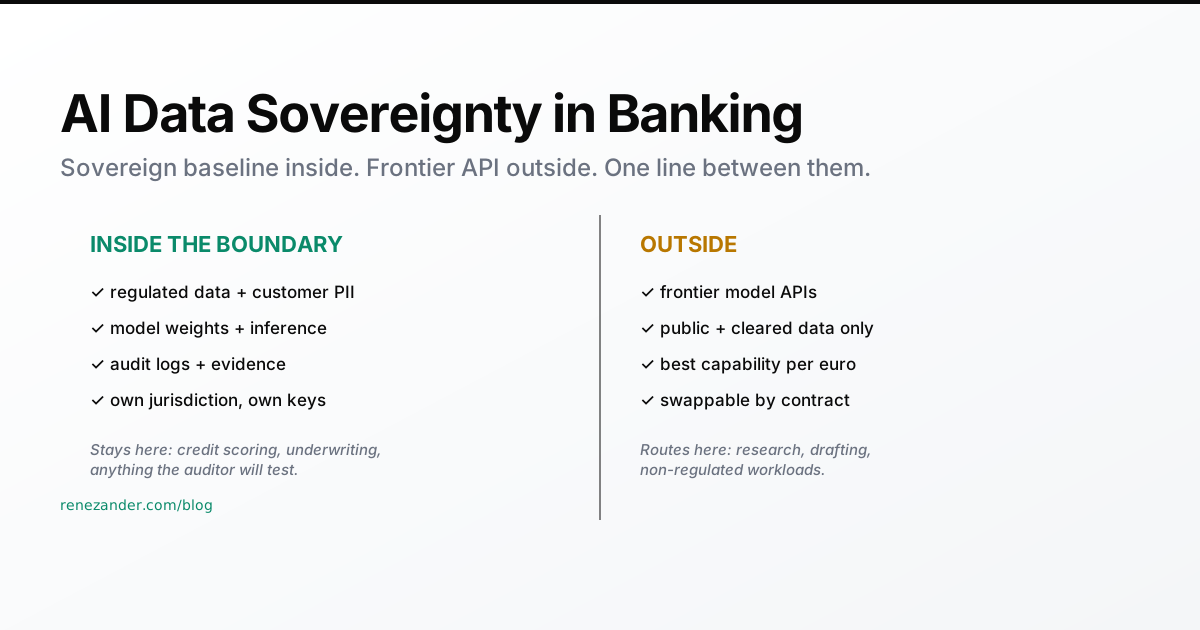
In German finance, “may our data touch a US API” has stopped being an infrastructure question. It is a board question now, and it decides whether an AI program ships or stalls.
From August 2026, the EU AI Act’s high-risk rules reach credit scoring and insurance risk assessment, two of the workloads DACH institutions most want to automate. Violations are priced at up to 35 million euros or 7 percent of global turnover, and DORA has applied directly since January 2025. A rollout that fails its audit is no longer a delay. It is a write-off with a fine attached.
Every regulated team I talk to is stuck in the same place. Not on model quality; the models cleared the bar a while ago. Not on use cases; the backlog is overflowing. They are stuck on the boundary, and the boundary is three decisions nobody has signed.
The Stall Is Not Where the Roadmap Says
AI projects in banking and insurance rarely fail on model quality. They fail at the compliance boundary: the decision about which data classes may leave the organization, where models run, and who is accountable to the auditor. Teams that ship design this boundary first and choose their architecture second; teams that retrofit governance afterwards stall.
On the roadmap, the risk sits in the technology. In the steering committee, it sits in the unsigned decisions, and one of them is routinely underestimated: a query routed to a model hosted abroad has left the jurisdiction even when the database stayed in Frankfurt. These are not infrastructure tickets. They are governance calls with board visibility, and no amount of engineering below them can substitute for making them.
Boundary First, Architecture Second
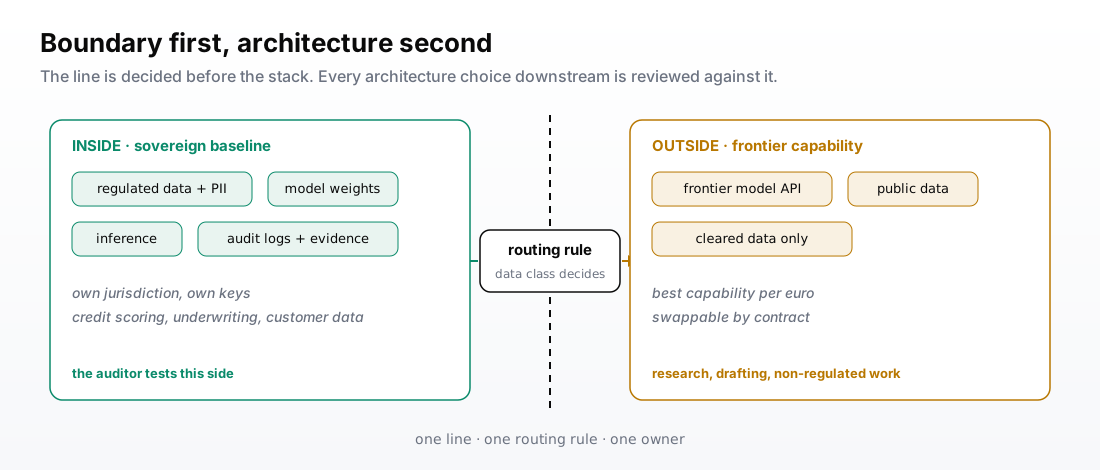
The teams shipping AI in banking and insurance right now all did the same thing: they drew the compliance boundary before they chose the stack. A sovereign baseline inside, where regulated data, model weights, inference, and audit logs stay in their own jurisdiction under their own keys. Frontier capability outside, where external APIs handle work on data that is public or already cleared to leave. Between the two, one line, with one routing rule and one owner.
The order matters more than the components. Once the boundary exists as a signed artifact, a data-flow diagram compliance has approved, every architecture choice downstream becomes reviewable against it. New use case? Classify the data, route it. The auditor gets one line to test instead of forty integrations to untangle.
The Retrofit Is Where Rollouts Die
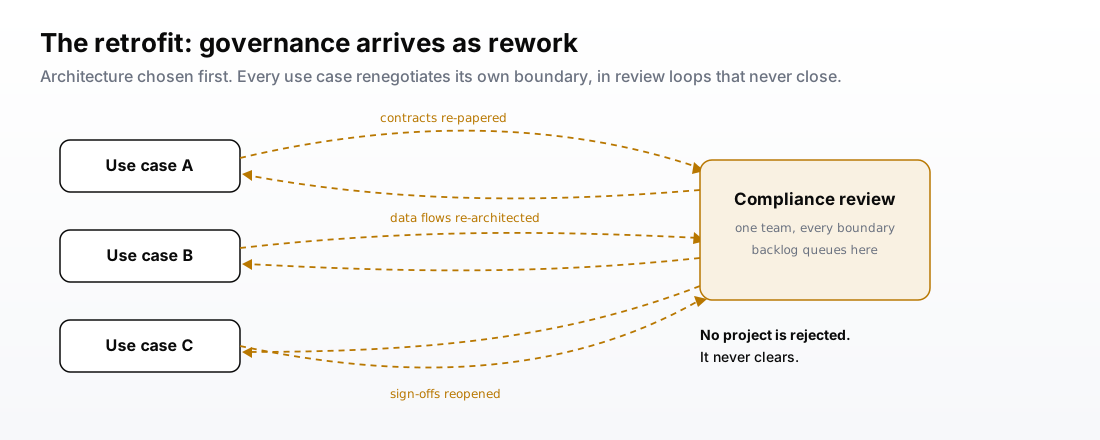
The teams still waiting picked the architecture first. For them, every governance requirement arrives as rework: vendor contracts re-papered, data flows re-architected, audit sign-offs reopened for each use case. Each new AI feature renegotiates its own boundary from scratch, and the backlog that looked overflowing is now queued behind the compliance team.
That retrofit is where AI rollouts die. Not in a loud failure; in review loops that never close. The German financial IT press has reached the same verdict: AI in banking fails on architecture, not algorithms, and supervisors read compliance from the architecture, not from policy documents. BaFin’s December 2025 guidance points the same direction, expecting AI systems to be mapped in ICT risk management across their entire lifecycle, from data sourcing to decommissioning.
What the Line Looks Like
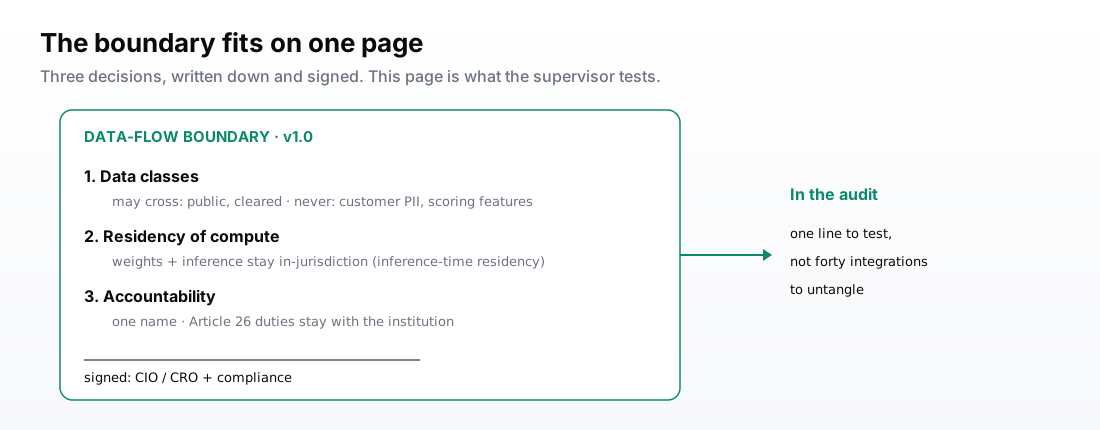
The boundary fits on one page, and that is its strength. Three decisions, written down.
- Data classes. Which categories may cross the line, and which never do.
- Residency of compute. Where the weights live and where inference runs, because inference-time residency counts, not storage residency alone.
- Accountability. One name who signs the boundary and presents it in the audit, because operator duties under Article 26 of the AI Act stay with the institution regardless of what the vendor contract says.
Institutions that hold this page treat data sovereignty as a design constraint rather than a brake. The constraint is doing them a favor: it decides early which programs can reach production at all. A retrofit decides the same thing later, at rework prices, and the answer often comes back as a rollout that never clears review.
Whoever draws the boundary first buys back the freedom to change everything on either side of it.
Next step
If your AI program is waiting on an unsigned boundary, the fastest way past it is a scoped plan: your data classes, the line between inside and outside, and what ships first, as a written scope with hour estimates on your desk in 24 hours.
Hour estimates per phase, or a clear no with reasons.
Your agents answer from whatever the retriever finds, and too often that is last quarter's truth. I build the context layer they answer and act from: a temporal knowledge graph that keeps every fact with its source and the time it held, reads with each person's own permissions, and writes nothing without a person's approval. On your own tenant, billed by the hour, step by step.